
When Physics Tuition Runs Ahead of School Lessons: The Potong Pasir IP Alignment Problem
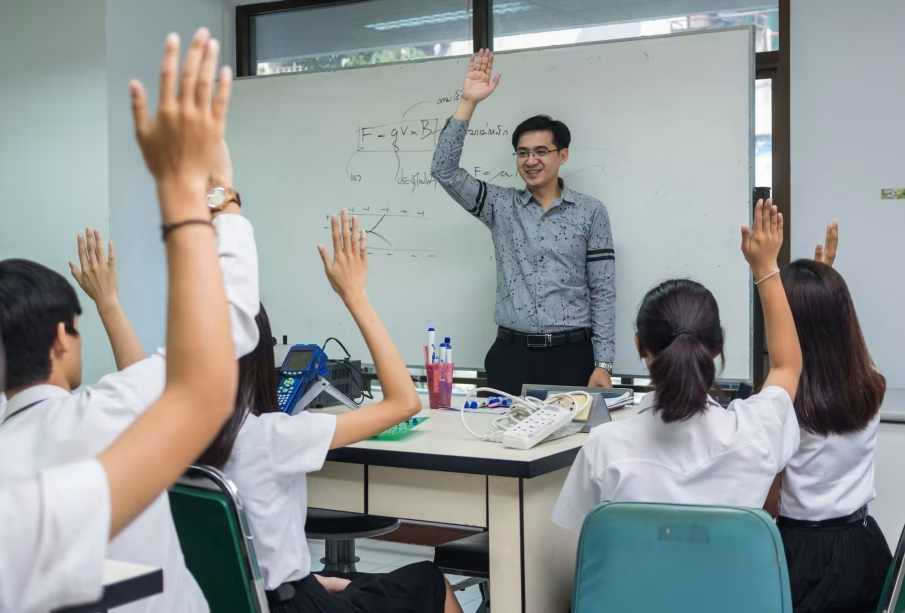
Advancing beyond the school syllabus can appear academically ambitious. Students encounter concepts early, parents see visible progress, and later school lessons may feel familiar. However, faster coverage is useful only when it supports the student’s actual curriculum and does not create shallow or disconnected understanding.
Parents evaluating the Best Physics Tuition Potong Pasir options for an Integrated Programme student should ask how tuition content is aligned with the school’s sequence, depth and assessment style. IP schools do not necessarily teach every concept in the same order or examine it through identical question formats.
When tuition moves ahead without deliberate alignment, students may know fragments of advanced material while remaining unprepared for the reasoning expected in their current school assessments.
Why IP Alignment Is More Complex Than Topic Matching
Two programmes may cover “forces” or “electricity” during the same academic year but differ significantly in emphasis.
One school may prioritise mathematical relationships and structured calculations. Another may focus more heavily on experimental design, qualitative explanation or applying concepts to unfamiliar situations.
Topic labels alone therefore do not prove alignment. A useful comparison should examine:
- Learning objectives
- Depth of treatment
- Required mathematical tools
- Practical expectations
- Terminology and conventions
- Assessment format
- Timing of school tests
- Connections with earlier school content
A tuition class can be scientifically correct while still being poorly timed for a particular student.
The Illusion of Mastery from Early Exposure
Students often feel confident when they recognise terms that were introduced in tuition before appearing in school. Recognition, however, is not the same as mastery.
A student may remember that momentum is conserved but struggle to identify the correct system in a collision. The student may recall an equation for electrical power but fail to choose between alternative relationships. Early exposure can create familiarity without flexible application.
This becomes risky when familiarity reduces attention during the school lesson. The student assumes the topic is already known, overlooks the school’s specific method or misses a deeper condition attached to the principle.
Effective acceleration should therefore include retrieval, application and diagnostic checking. Simply presenting future chapters earlier provides limited value.
Running Ahead Can Leave Current Weaknesses Unresolved
Time spent on advanced content is time not spent consolidating present requirements.
An IP student may be introduced to future mechanics while still making errors in vectors, graph gradients or unit conversion. These weaknesses will later interfere with the advanced topic.
Physics knowledge is cumulative. New material often assumes that earlier reasoning has become stable. If the foundation remains fragile, acceleration can widen the gap between what the student has encountered and what the student can actually use.
A well-aligned programme should distinguish between:
- A concept the student has seen
- A concept the student can explain
- A method the student can execute
- A concept the student can transfer to an unfamiliar problem
Progress should be measured at the fourth level, not merely the first.
Differences in Terminology and Method
Schools and tuition programmes may use different conventions when presenting the same idea. Usually, the science remains compatible, but inconsistent language can confuse students under assessment conditions.
For example, teachers may differ in how they describe energy stores and transfers, how they annotate forces, or how they structure practical evaluation. A student may also learn a shortcut in tuition before understanding the full reasoning used at school.
Shortcuts are especially risky when they work for familiar questions but fail in less standard contexts. A memorised rule may produce the correct direction or formula without helping the student explain why.
Alignment does not require tuition to imitate every school worksheet. It requires awareness of the school’s expectations and the ability to connect alternative methods without creating contradiction.
The Assessment Calendar Matters
A student preparing for a school test on thermal physics may gain little immediate benefit from tuition lessons covering waves several weeks ahead. The advanced exposure may be interesting, but it can compete with urgent preparation.
This does not mean tuition should become short-term test drilling. It means the programme should balance three time horizons:
Immediate readiness
The student must prepare for upcoming school assessments and address current misunderstandings.
Medium-term consolidation
Recent topics should be revisited after a delay so that they remain accessible beyond the next test.
Long-term progression
Future topics can be introduced when the student has sufficient foundation and when early exposure will create a genuine advantage.
A programme focused only on immediate tests can become reactive. A programme focused only on acceleration can become detached. Effective alignment maintains all three.
How Misalignment Appears in Student Work
The problem is not always obvious from attendance or worksheet completion. It often appears through patterns in marked work.
A student may:
- Use knowledge that is correct but outside the expected scope
- Apply an advanced formula without explaining its basis
- Miss marks because the school requires a particular reasoning chain
- Confuse two topics learned close together but assessed separately
- Perform well on tuition worksheets but weakly on school papers
- Neglect current corrections because future content feels more impressive
- Memorise a method without recognising when it does not apply
These patterns should prompt a comparison between the tuition sequence and the student’s actual learning needs.
Productive Forms of Acceleration
Running ahead is not inherently harmful. It can be effective when introduced selectively.
Pre-teaching essential vocabulary
A brief preview can reduce the language burden when the topic begins at school. Students can then focus more fully on the underlying reasoning.
Strengthening prerequisite knowledge
Before advanced dynamics, students may revisit graphs, vectors and proportional relationships. This is technically preparatory work, but it produces more durable acceleration than rushing into formulas.
Introducing conceptual frameworks
A student can be shown the central question of a future topic without completing the entire chapter. For waves, this might involve distinguishing what travels from what oscillates.
Using low-stakes diagnostic tasks
Short questions can determine whether the student has retained the prerequisite concepts. Acceleration proceeds only when the evidence supports it.
Connecting future ideas to current work
Advanced content should illuminate present concepts. It should not appear as an isolated sequence that the student must memorise separately.
Questions Parents Can Ask About Alignment
Parents do not need to compare every line of two curricula. A few focused questions can reveal whether the programme is responsive:
- How is the current tuition sequence related to the student’s school coverage?
- What happens when the school assessment order differs?
- How are knowledge gaps diagnosed before advanced content begins?
- Are students expected to explain ideas or only complete procedures?
- How is older learning revisited?
- Can the student bring school corrections for analysis?
- How is progress measured beyond worksheet completion?
The answers should demonstrate a learning process, not merely a promise to “stay ahead.”
The Role of the Student
Alignment cannot be managed by teachers and parents alone. The student should communicate upcoming topics, assessment dates and recurring errors.
Students can keep a short record containing:
- Current school chapter
- Next assessment date
- Recent correction patterns
- Tuition topic
- Questions that remain unresolved
- Earlier concepts requiring review
This information allows tuition support to respond more precisely. It also teaches the student to monitor personal learning rather than waiting for adults to diagnose every difficulty.
A More Responsive Potong Pasir Approach
For an IP student, the value of TGC ACADEMY should lie in purposeful sequencing rather than simply covering more chapters in less time.
Advanced material can be introduced when it strengthens the student’s school learning, prerequisites are secure and sufficient time remains for current assessment preparation. When school and tuition sequences differ, explicit bridges can help students understand how the ideas relate.
Families considering the Potong Pasir location can use the following details:
TGC Academy (Potong Pasir)
Address: 107 Potong Pasir Ave 1, #01-K1, Singapore 350107
Telephone: +65 8920 0792
Operating hours:
- Monday: 3:00 PM to 10:00 PM
- Tuesday: Closed
- Wednesday: 3:00 PM to 10:00 PM
- Thursday: 3:00 PM to 10:00 PM
- Friday: 3:00 PM to 10:00 PM
- Saturday: 3:00 PM to 8:00 PM
- Sunday: Closed
Final Thoughts
Being ahead is valuable only when the student remains secure in the present. Acceleration should increase readiness, deepen connections and reduce later cognitive load. It should not produce fragmented knowledge or distract from immediate school requirements.
The most useful question is not, “How many chapters ahead is the class?” It is, “Can the student use what has been taught, and does it strengthen current and future learning?” That distinction turns acceleration from a marketing idea into a defensible educational strategy.
Frequently Asked Questions
Should IP students always study ahead?
No. Early exposure is helpful when prerequisite knowledge is secure and the future material does not displace urgent consolidation.
What if the tuition and school sequences are different?
Different sequences can work, but the student needs explicit connections between them. Current school assessments and unresolved weaknesses should remain visible in the plan.
Can advanced formulas harm understanding?
They can if introduced as shortcuts without conceptual reasoning. Students should understand the conditions under which a relationship applies.
How can parents detect superficial acceleration?
Ask the student to explain the new concept, solve an unfamiliar question and connect it to prior learning. Recognition of terminology alone is insufficient.